
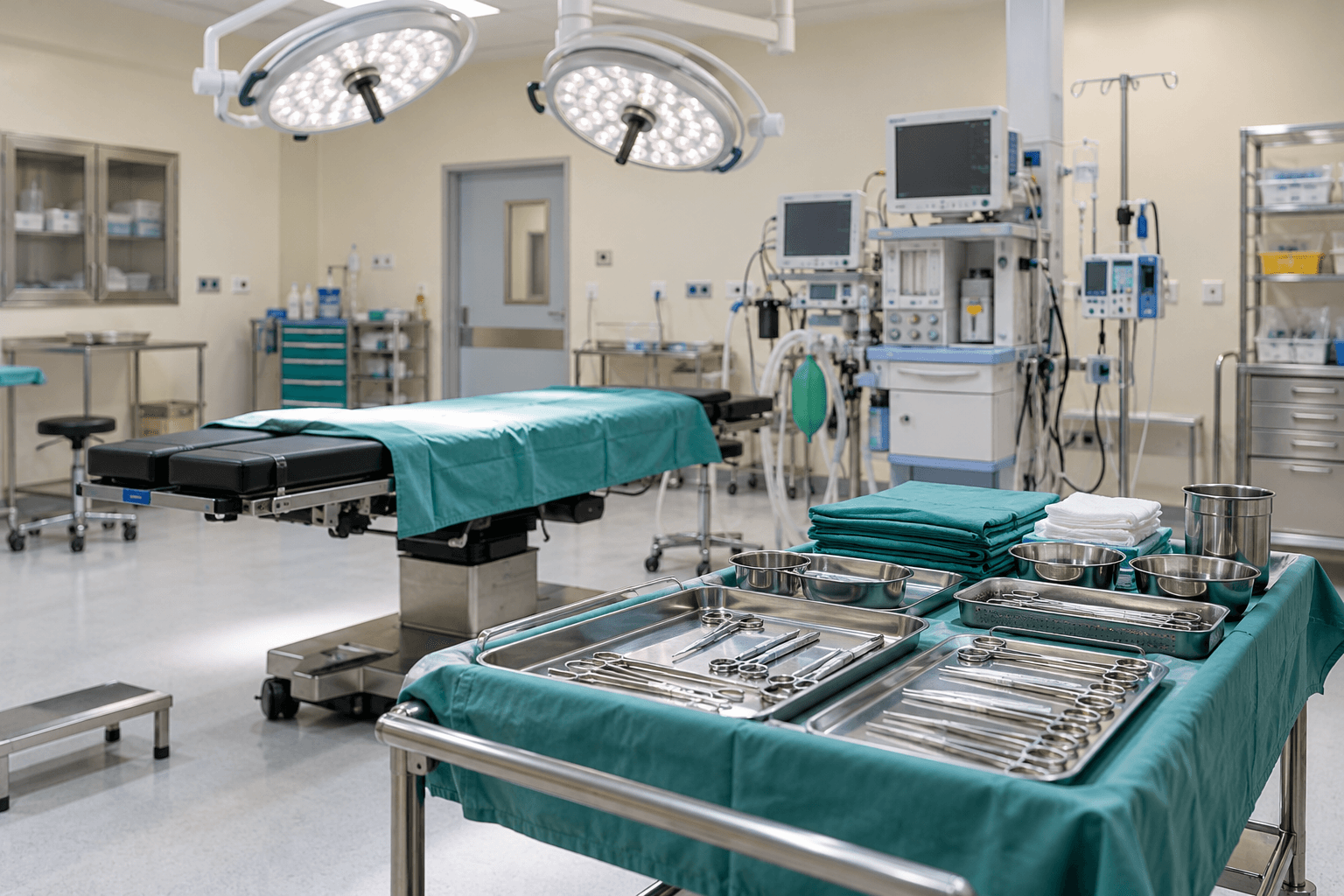
Uganda's Ministry of Health announced in June 2026 that expansion and rehabilitation work had begun at Buseruka Health Centre, Hoima Regional Referral Hospital, and Masindi General Hospital. The Ministry described planned services at Buseruka including emergency care, radiology, a theatre, and inpatient wards, as well as expanded services and an ICU at Hoima Regional Referral Hospital. This is an announcement of works and planned services, not confirmation that every project is now complete. See the Ministry's 12 June 2026 update.
Equipment plans need to account for staffing, utilities, training, and maintenance. Uganda's Ministry of Health launched its National Medical Equipment Management Guidelines (2024) in May 2025. The guidelines cover the equipment lifecycle, including needs assessment, acquisition, pre-installation, training, quality assurance, maintenance, inventory, and eventual decommissioning.
Start with the service the facility is ready to provide
Before selecting equipment or instrument sets, map the intended service, procedures, staffing, utilities, room layout, sterilisation capacity, storage, and maintenance support. The Ministry's guideline summary says acquisition planning should establish need, available human resources, infrastructure, and utilities so equipment can be fully used.
Specify complete, compatible sets
For surgical instruments, a written specification should identify the set or system, components, quantities, compatibility requirements, reusable or single-use status, and the manufacturer's instructions for use. For powered or electronic devices, include required accessories, power and environmental conditions, training, installation, maintenance, consumables, and spare parts. Compare the full cost and service plan over the equipment's life rather than the purchase price alone.
Prepare for commissioning and upkeep
Assign responsibility for acceptance checks, asset records, user training, preventive maintenance, repairs, and tracking. Keep instructions and service records with the asset, and identify the route for reporting faults. If a device cannot be supported locally, establish how service, parts, and downtime will be handled before procurement.
For suppliers, that means providing accurate specifications, compatible instruments, clear documentation, and realistic support information. Maurivik Uganda can respond to enquiries about surgical instruments and appliances, with current product availability and applicable documents confirmed for each request.
This article is general information. Product status can change; check current manufacturer documents and regulator records for the specific product.
Ask about a product